
Bed Bug Heat Treatment in Toronto & the GTA
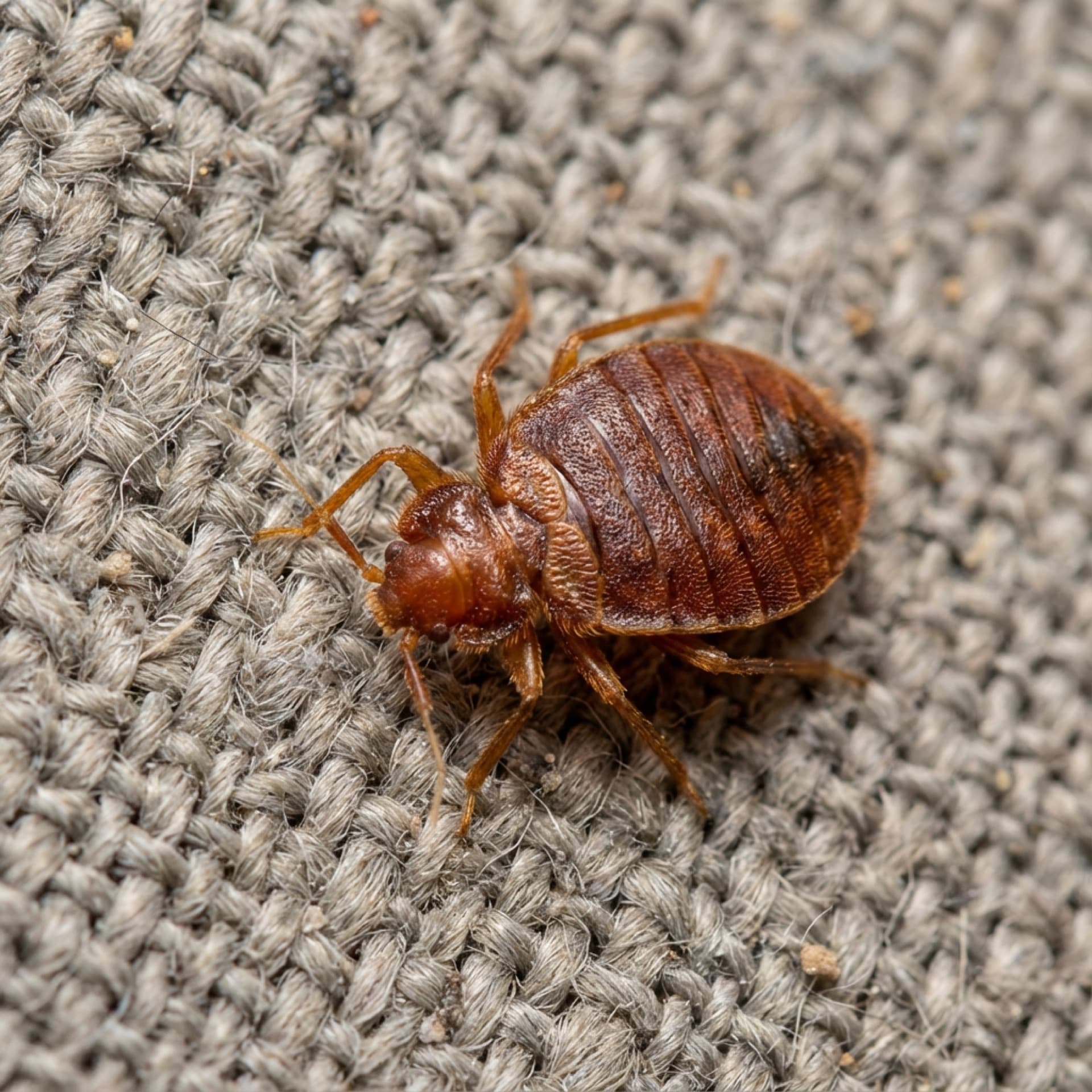
Bed bugs (Cimex lectularius) are small, flat, reddish-brown insects that feed exclusively on blood — primarily human blood — and hide in the immediate environment of the sleeping or resting area during the day. Adults are approximately 4–5 mm long when unfed, roughly the size of an apple seed, and can flatten their bodies to hide in seams, tufts, and folds of mattresses, in box spring frames, behind headboards, inside electrical outlet boxes, and in cracks in baseboards within a metre or two of the bed.
Bed bugs are not a hygiene problem — they travel passively on luggage, used furniture, clothing, and shared laundry facilities, and can be found in hotels, hospitals, transit, and private homes across all income levels. They do not indicate unsanitary conditions. What they do indicate is that, once introduced, they will establish a population rapidly if not treated: a single mated female can produce 1–5 eggs per day, and an untreated bedroom infestation can spread to adjacent rooms within weeks.
Heat treatment is the most effective method for bed bug elimination. Bed bugs and their eggs die at sustained exposure to temperatures above approximately 50°C — a threshold that chemical treatments cannot reliably reach in every hiding location. A properly executed heat treatment cycles the entire room through lethal temperature and holds it there long enough to kill every life stage, including eggs, in a single treatment.
- Licensed & insured — Ontario Reg. 63/09
- Same-day & next-day service
- Humane methods
- 5-year warranty on sealing work
- Across the GTA, Oakville to Oshawa
- 24/7 emergency line
Signs of a bed bug infestation
- Small rust-coloured spots on mattress seams, sheets, or the wall behind the headboard — these are bed bug excrement (digested blood)
- Live insects in the seams and tufts of the mattress, in the box spring frame, or behind the headboard — reddish-brown, flat, roughly apple-seed sized when unfed
- Shed skins (cast exoskeletons) in the same hiding areas — translucent, empty shells roughly the shape and size of the live insect
- Itchy red welts on the skin that appear overnight, often in a line or cluster pattern, on exposed skin areas
- A faint sweet, musty odour in a heavily infested room — described as similar to coriander or raspberry jam; present only in significant infestations
- Small white eggs (approximately 1 mm) in the seams and folds of mattress fabric
How we handle it
Inspection and infestation mapping
We inspect all likely harborage sites: mattress seams, box spring, bed frame, headboard, nightstands, baseboards, outlets, and upholstered furniture in the room. We confirm the infestation, assess its extent, and determine whether it has spread to adjacent rooms.
Preparation
Before heat treatment, residents receive a preparation checklist: items sensitive to heat (candles, aerosols, certain medications, live plants) must be removed. Clutter must be reduced so heated air circulates through all areas. Laundered fabrics go into the dryer on high heat as a precaution and remain bagged until treatment is complete.
Heat treatment
Portable electric heaters raise the room to a sustained lethal temperature — above approximately 50°C at the hottest points, verified with calibrated thermal sensors placed throughout the space. The temperature is maintained at this level for several hours to ensure heat penetrates into wall voids, furniture frames, and other insulated areas where bed bugs hide. No chemical residue is left in the treated space.
Post-treatment inspection and follow-up
Following the heat cycle, the room is inspected again. A residual barrier treatment may be applied along baseboards as a post-heat precaution. A follow-up visit confirms no survivors or newly hatched eggs have established.
Bed bug heat treatment requires occupants to vacate for the day. Re-entry is possible the same evening once the space has cooled to a comfortable temperature. The preparation requirements are critical to treatment success — an incomplete prep (items left in place that block heat circulation) can leave cold spots where bed bugs survive.
View all pest control & wildlife removal services we offer across Toronto and the GTA.
Service Areas for Bed Bug Heat Treatment
We provide specialized bed bug heat treatment services in the following neighborhoods and cities:
Starting at $395
Final price depends on the animal, the number of entry points, and the sealing work needed. You get a firm quote after the inspection — no surprise charges.
Bed Bug Heat Treatment
Thermal treatment that ends an infestation, often in a single visit.
View planBed Bug Heat Treatment — Frequently Asked Questions
Does heat treatment really kill bed bugs in one visit?
Our thermal heat treatment brings the space to a temperature that kills bed bugs and their eggs at every life stage, reaching into cracks, seams, and wall voids that sprays miss — often in a single visit. We follow up to confirm.
How do I prepare for a bed bug treatment?
Generally you'll declutter floors, wash bedding in hot water, and move furniture from walls. We provide a detailed prep checklist before we arrive so the treatment is as effective as possible.
Is the treatment safe for my family and pets?
Heat treatment is a discreet, family- and pet-friendly approach that relies on temperature rather than heavy chemical use. We give you clear re-entry guidance for treatment day.
Are you licensed and insured?
Yes. Durapest is licensed by the Ontario Ministry of the Environment and operates in line with Ontario Reg. 63/09. Our technicians are trained and insured for both residential and commercial work.
Do you offer a warranty?
Yes. Treatments come with a warranty, and any sealing or exclusion work is backed by our 5-year warranty. If covered pests return within the warranty period, we come back and re-treat at no extra cost.
How soon can you come out?
We offer same-day and next-day service across most of the GTA, from Oakville to Oshawa, with 24/7 dispatch for emergencies. Call us and we'll give you a straight answer on the next available slot for your area.