
Bird & Nest Removal in Toronto & the GTA
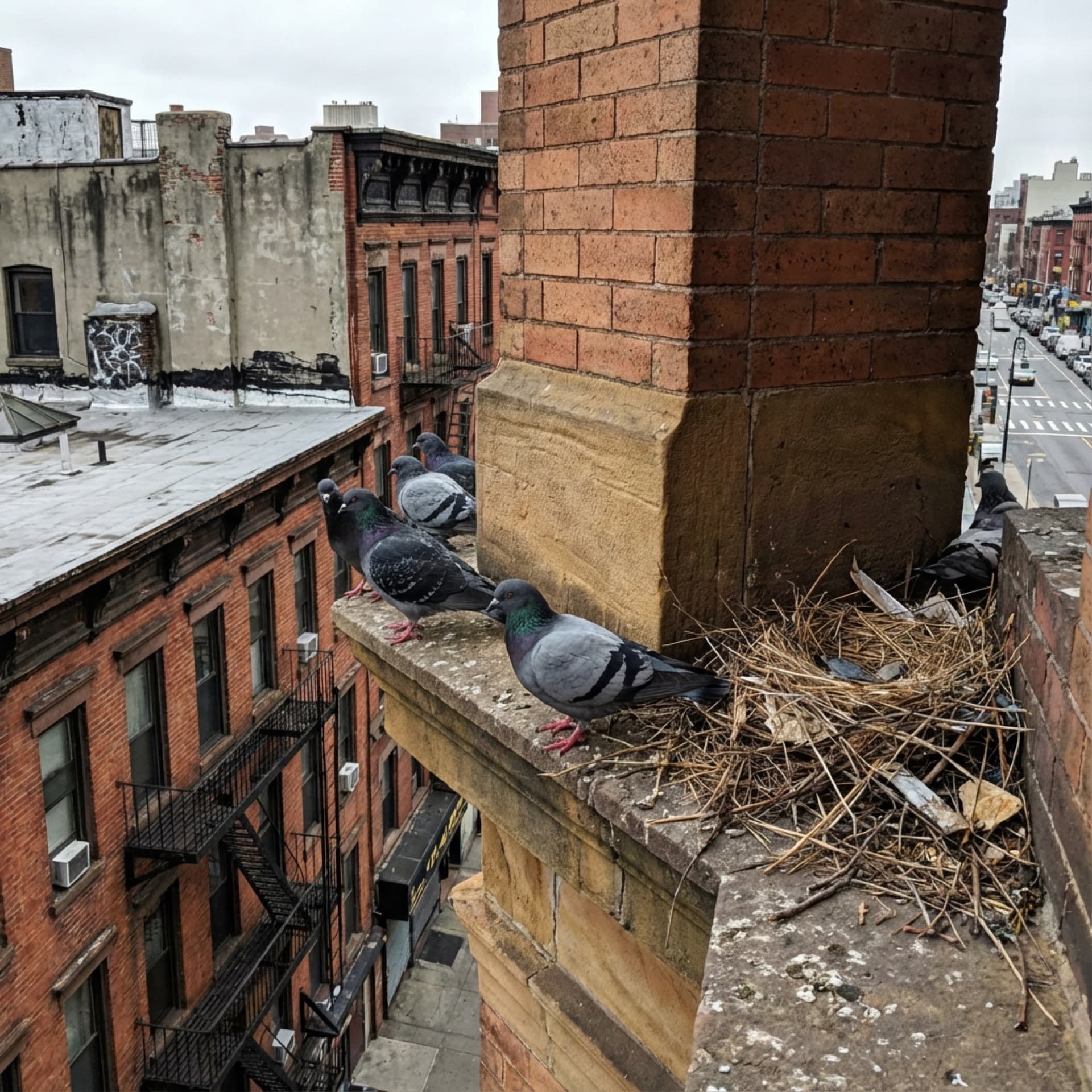
The most common bird pressure problems in the GTA involve three species: European starlings, house sparrows, and pigeons. Each creates distinct problems and requires different control methods. Starlings and sparrows are cavity-nesting birds that will use attic vents, dryer exhaust vents, roof vents, and open soffits. Pigeons roost and nest on flat or shallow-pitch roof areas, ledges, HVAC equipment, and parking structures.
Nesting material in a dryer vent or bathroom exhaust vent is a fire and moisture risk — the nest material is typically dry debris and the blockage traps both lint and humidity. Birds nesting near HVAC equipment on commercial rooftops can contaminate air intake streams. Pigeon droppings contain uric acid that corrodes metal and deteriorates roofing material over time; accumulated droppings also create a slip hazard on walking surfaces.
Where the calls come from follows the building stock. In Richmond Hill and Markham it is mostly rooflines — starlings and sparrows in gable vents, bathroom and dryer exhausts on two-storey homes under mature trees. In Scarborough and along the Toronto waterfront it is pigeons: condo balconies, parking structures, and the ledges and rooftop units of plazas and low-rise commercial buildings. The species and the surface decide the hardware, which is why we identify both before quoting.
Effective bird control relies on physically preventing access to the nesting or roosting site, not on deterrents alone. Reflective tape, plastic owls, and sound devices produce temporary displacement at best — birds habituate to visual and sound deterrents within days to weeks. Long-term control means closing the cavity entry, installing exclusion netting, or applying anti-roosting hardware to ledges.
- Licensed & insured — Ontario Reg. 63/09
- Same-day & next-day service
- Humane methods
- 5-year warranty on sealing work
- Across the GTA, Oakville to Oshawa
- 24/7 emergency line
Signs you have a bird infestation
- Chirping, scratching, or tapping sounds from inside a roof vent, soffit, or dryer exhaust — often with increased frequency in spring
- Nesting debris (straw, feathers, dried vegetation) visible at a vent opening or blown onto the roof or driveway
- Reduced airflow from a bathroom or laundry exhaust vent
- Accumulated pigeon droppings on a ledge, balcony, HVAC unit, or flat roof section — often concentrated in one roosting zone
- Multiple birds repeatedly visiting the same spot on your roofline over several days
- Insect pressure (bird mites) inside the home, particularly in a bedroom or living area adjacent to the nest location
How we handle it
Species and site assessment
We identify the species involved and locate all active nesting or roosting sites. The correct control method depends on the bird — vent exclusion for starlings and sparrows, netting or anti-roosting spikes for pigeons on ledges and rooftops.
Nest removal and vent clearing
Active nests are removed after the nesting season where legally required (migratory birds are protected under the federal Migratory Birds Convention Act — we will advise if timing restrictions apply to your situation). Vent interiors are cleared of debris and checked for blockage.
Exclusion installation
Vent covers with bird-proof screening are fitted over dryer, bathroom, and roof vents. Pigeon exclusion uses heavy-duty polypropylene netting or stainless steel anti-roosting systems, depending on the surface. We use commercial-grade hardware, not consumer deterrents.
Follow-up check
For active pigeon roost sites, a follow-up visit confirms the hardware is performing and that birds have not found an adjacent entry point.
Migratory bird protections
House sparrows and European starlings are non-native introduced species and are not protected under the federal Migratory Birds Convention Act or Ontario's Fish and Wildlife Conservation Act. However, many other species are protected, and nests with active eggs or young of protected species cannot be removed during the breeding season (generally April through August). We will identify the species before any nest removal and advise on timing if a protected species is involved.
Bird exclusion is highly effective when the entry points are correctly identified and sealed with appropriate hardware. Consumer-grade vent covers are often undersized or made from materials birds can push through — the difference in a professional installation is the hardware specifications.
Part of our wildlife removal service
Same process for every animal: find every entry point, let it leave through a one-way door, seal the opening with steel mesh, and clean up after. The sealing work carries a 5-year warranty.
How wildlife removal worksView all pest control & wildlife removal services we offer across Toronto and the GTA.
Service Areas for Bird & Nest Removal
We provide specialized bird & nest removal services in the following neighborhoods and cities:
Starting at $395
Final price depends on the animal, the number of entry points, and the sealing work needed. You get a firm quote after the inspection — no surprise charges.
Wildlife Removal + Exclusion
Humane removal and permanent exclusion — same-day across the GTA.
View planBird & Nest Removal — Frequently Asked Questions
Do you remove nests and block birds from returning?
Yes. We remove accessible nests where it's legal to do so and install deterrents and exclusion — netting, spikes, or screening — so birds stop roosting on vents, signs, and ledges.
Why does bird control matter beyond the mess?
Droppings are corrosive and a health concern, and nests in vents and chimneys are a fire and blockage risk. Exclusion protects the building, not just the look of it.
Pigeons keep landing on my condo balcony — can you stop it?
Yes. Balcony pigeons are a roosting problem, so the fix is hardware, not scaring: fine netting across the open face of the balcony or stainless anti-roosting strips on the railing and ledge, depending on what the building allows. We check with you on condo rules before quoting, and we clean the droppings as part of the job.
There's a nest in my dryer vent right now — do I have to wait until the birds leave?
It depends on the species. Starlings and house sparrows, the two birds that most often use dryer and bathroom vents, are not protected, so the nest can be removed and the vent screened right away. If it turns out to be a protected species with eggs or young, we wait until they have fledged and screen the vent then. Either way, keep the dryer off until the vent is clear — a blocked exhaust is a fire risk.
Are you licensed and insured?
Yes. Durapest is licensed by the Ontario Ministry of the Environment and operates in line with Ontario Reg. 63/09. Our technicians are trained and insured for both residential and commercial work.
Do you offer a warranty?
Yes. Treatments come with a warranty, and any sealing or exclusion work is backed by our 5-year warranty. If covered pests return within the warranty period, we come back and re-treat at no extra cost.
How soon can you come out?
We offer same-day and next-day service across most of the GTA, from Oakville to Oshawa, with 24/7 dispatch for emergencies. Call us and we'll give you a straight answer on the next available slot for your area.